A Deep-Sea Shrimp Was Filmed Eating a Dragonfish That Was Still Alive
Shrimp like this were thought to be scavengers. Nearly a kilometer down on a Pacific seamount, a NOAA robot found one on top of a living fish.
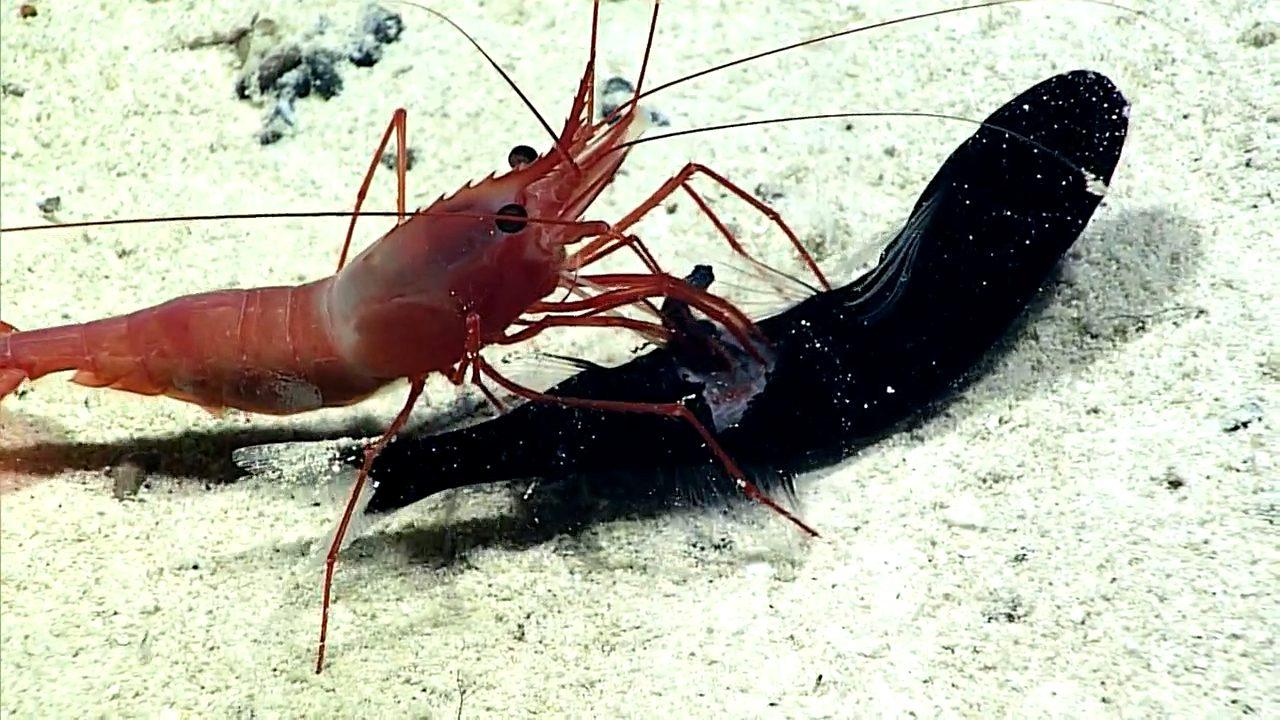
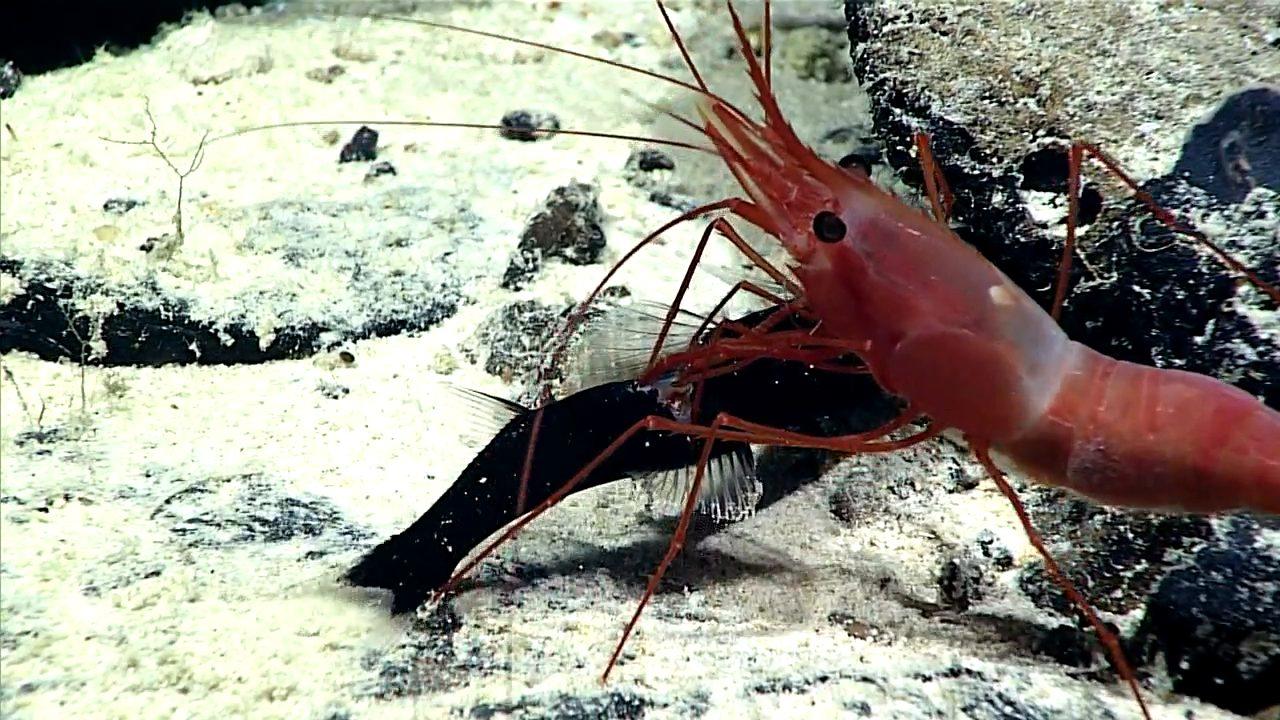
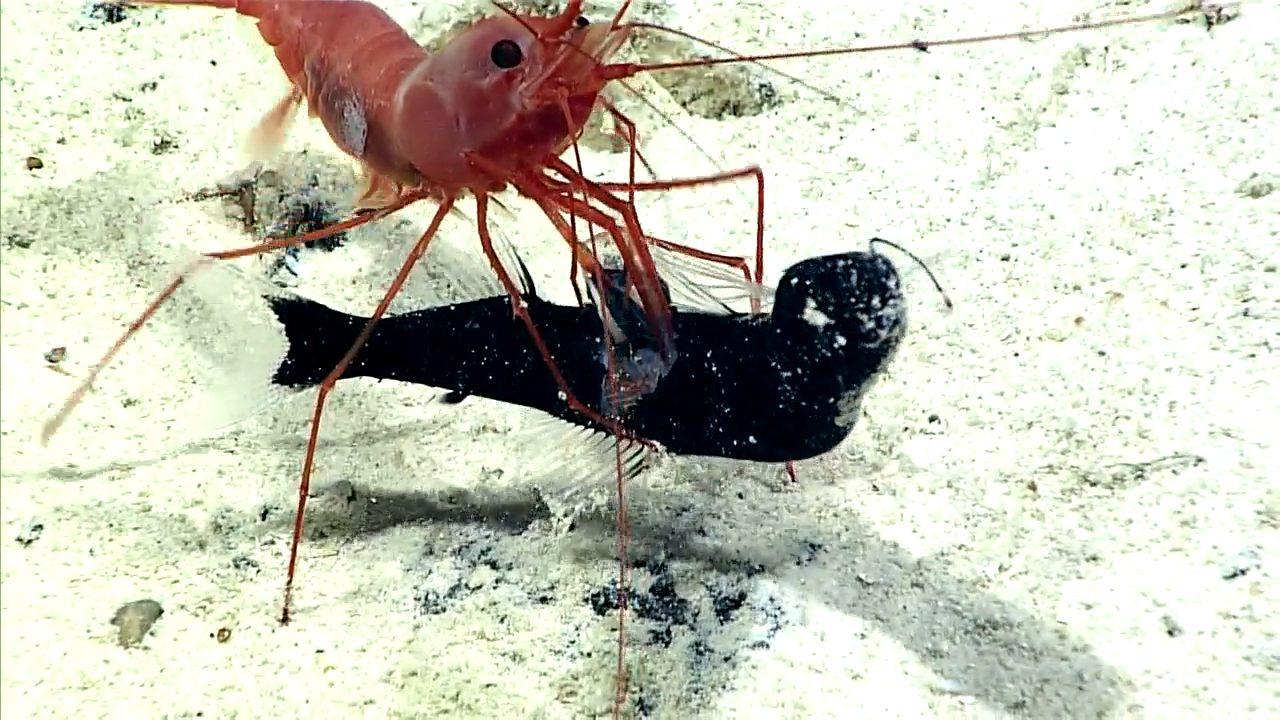
Ufiata Seamount is an underwater mountain in the Tokelau Seamount Chain, in the Pacific Ocean. On March 27, 2017, during an expedition to survey remote marine protected areas, NOAA's remotely operated vehicle was working at a depth of nearly 1,000 meters when its cameras picked up a red shrimp sitting on top of a long black fish.
The fish was moving.
What the camera recorded
- The shrimp is a caridean shrimp in the genus Heterocarpus. The fish is a midwater dragonfish, possibly a kind known as a stareater.
- The shrimp stays on top of the fish, holding it with its legs while it feeds.
- Over the course of the clip it eats several pieces of the fish's tissue and the contents of its stomach.
- The dragonfish is alive while this happens. Its body bends and straightens under the shrimp.
Why scientists cared
Deep-sea shrimp of this kind were thought to be mainly scavengers, animals that eat what is already dead. Scientists had watched squat lobsters pick midwater fish out of the water and eat them, but according to NOAA they had never seen a shrimp eat a fish like this. NOAA released the clip under the title "Deepsea Battle: Featherweight Division."
What nobody knows yet
How the shrimp ended up with a live fish. A dragonfish is a midwater animal, not one that normally lies on the bottom. Either the shrimp caught it, or the fish was already hurt when it reached the seafloor and the shrimp got to it first. The camera arrived after that question had been settled.
How this was recorded
This dive was part of NOAA's 2017 expedition Discovering the Deep: Exploring Remote Pacific Marine Protected Areas. The remotely operated vehicle Deep Discoverer filmed the encounter while tethered to the NOAA Ship Okeanos Explorer, and NOAA later included the clip in its collection of notable feeding events from its expeditions.
Next case file 004 →Brittle Stars Were Supposed to Be Scavengers. Then They Caught a Squid.The record
- Date
- March 27, 2017
- Location
- Ufiata Seamount, Tokelau Seamount Chain, Pacific Ocean
- Depth / setting
- Nearly 1,000 m (3,280 ft)
- Camera
- ROV Deep Discoverer, NOAA Ship Okeanos Explorer
- Animals
- Caridean shrimp (Heterocarpus sp.); midwater dragonfish, possibly a stareater
- Footage
- NOAA Ocean Exploration, Discovering the Deep: Exploring Remote Pacific MPAs
- Rights
- Public domain (U.S. Government work)
Sources
- NOAA Ocean Exploration, "Amazing Feeding Events"
- NOAA Ocean Exploration, original video, March 27, 2017
Published 2026-11-15 · Corrections: contact@wildevidence.com