A Second Polar Bear Walked Up to One Wearing a Camera and Looked Straight Into the Lens
The collar camera was there to record how a female polar bear spends her days. On April 12, 2014, it recorded who came to see her.
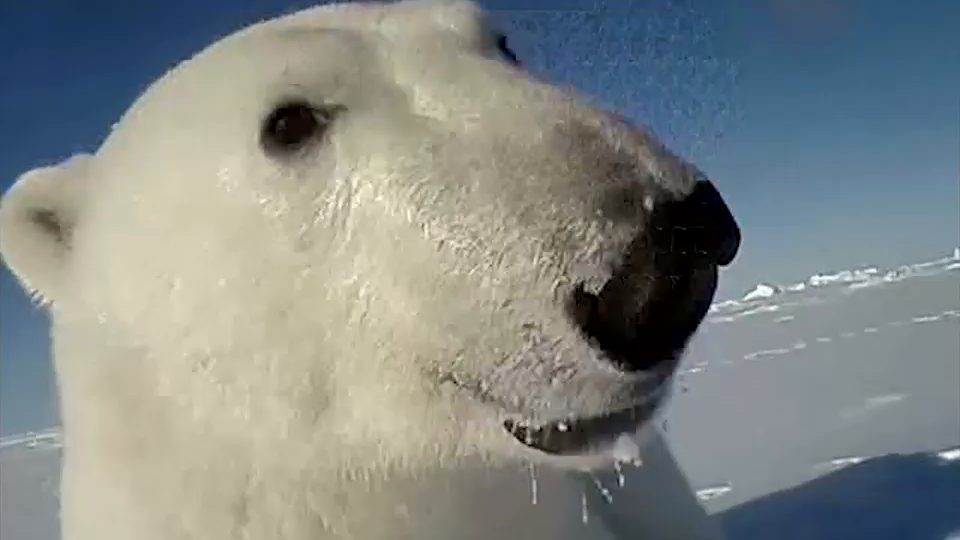
The camera was on a collar around the neck of a female polar bear on the sea ice north of Prudhoe Bay, Alaska. U.S. Geological Survey scientists put it there in April 2014 to learn how she spends her days: how often she hunts, eats, rests, walks and swims.
On April 12, the camera's clock shows, she had company for most of the afternoon.
What the camera recorded
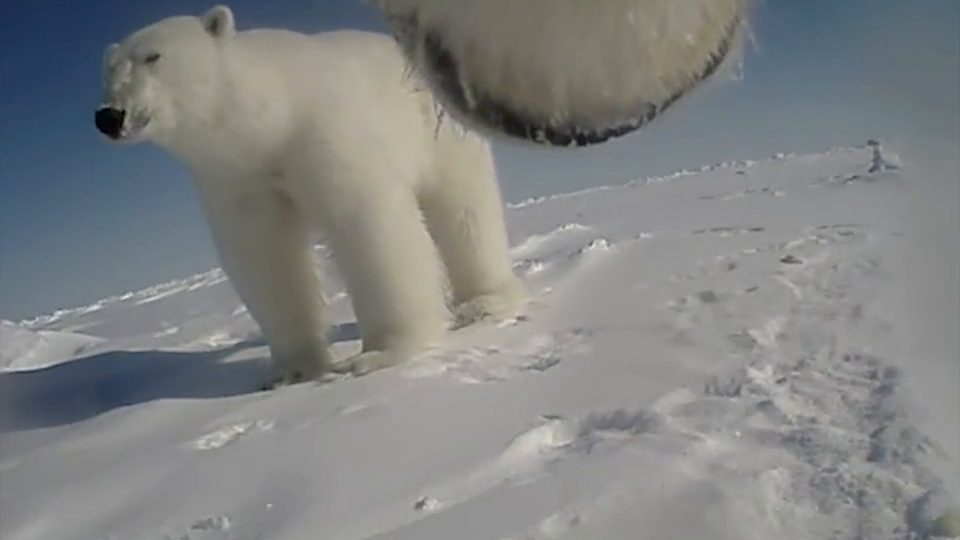
- 1:04 p.m. A second polar bear is standing on the ice a few yards away.
- 1:14 p.m. It is closer now, at the top of the frame, on wet ice.
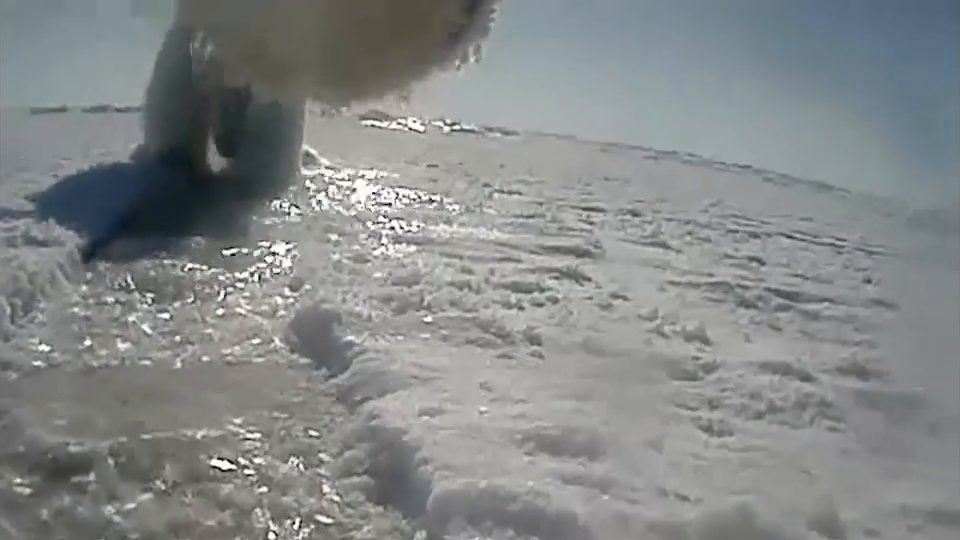
- 5:26 p.m. More than four hours after it first appears, the bear's face fills the frame. It looks straight into the lens.
Why scientists cared
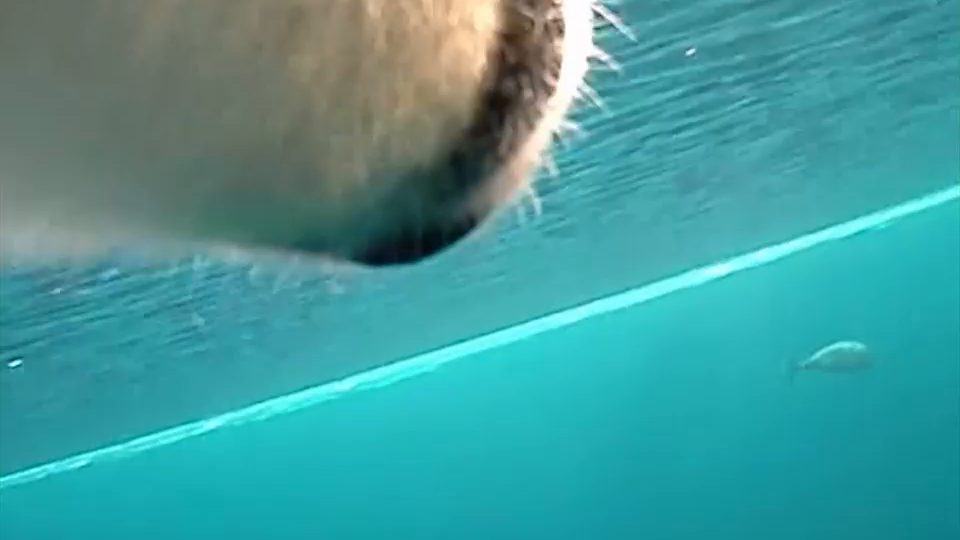
When USGS released its first collar video in 2014, it listed what the footage showed: an interaction with a potential mate, a bear playing with her food, and swimming at the surface and under the ice. USGS does not say which clip is which, so this page calls the visitor a second polar bear and nothing more.
Meetings like this were almost impossible to watch before. The collars stay on for about eight to ten days and are linked to GPS, so each minute of video can be matched to a place on the ice. The study they fed, led by USGS biologist Anthony Pagano, was published in the journal Science in 2018.
What nobody knows yet
What the two bears did when the camera was pointing somewhere else. A collar camera sees only what is in front of the bear wearing it.
How this was recorded
The camera looks forward from under the female's chin, and its clock is stamped on every frame; the times on this page are read from that clock. USGS lists the footage as public domain.
Next case file 001 →A Wreckfish Swallowed a Shark Whole While Eleven Others Were Busy EatingThe record
- Date
- April 12, 2014
- Location
- Sea ice north of Prudhoe Bay, Alaska (Beaufort Sea)
- Depth / setting
- On the sea ice
- Camera
- USGS video collar on a free-ranging female polar bear
- Animals
- Polar bear (Ursus maritimus)
- Footage
- U.S. Geological Survey
- Rights
- Public domain
Sources
- U.S. Geological Survey, "Polar Bear - POV Cams (Spring 2014)"
- U.S. Geological Survey news release, June 6, 2014
- U.S. Geological Survey, "Polar Bears Film Their Own Sea Ice World" (February 1, 2018)
- U.S. Geological Survey, collar camera footage 2014-2016
Published 2026-11-15 · Corrections: contact@wildevidence.com