Brittle Stars Were Supposed to Be Scavengers. Then They Caught a Squid.
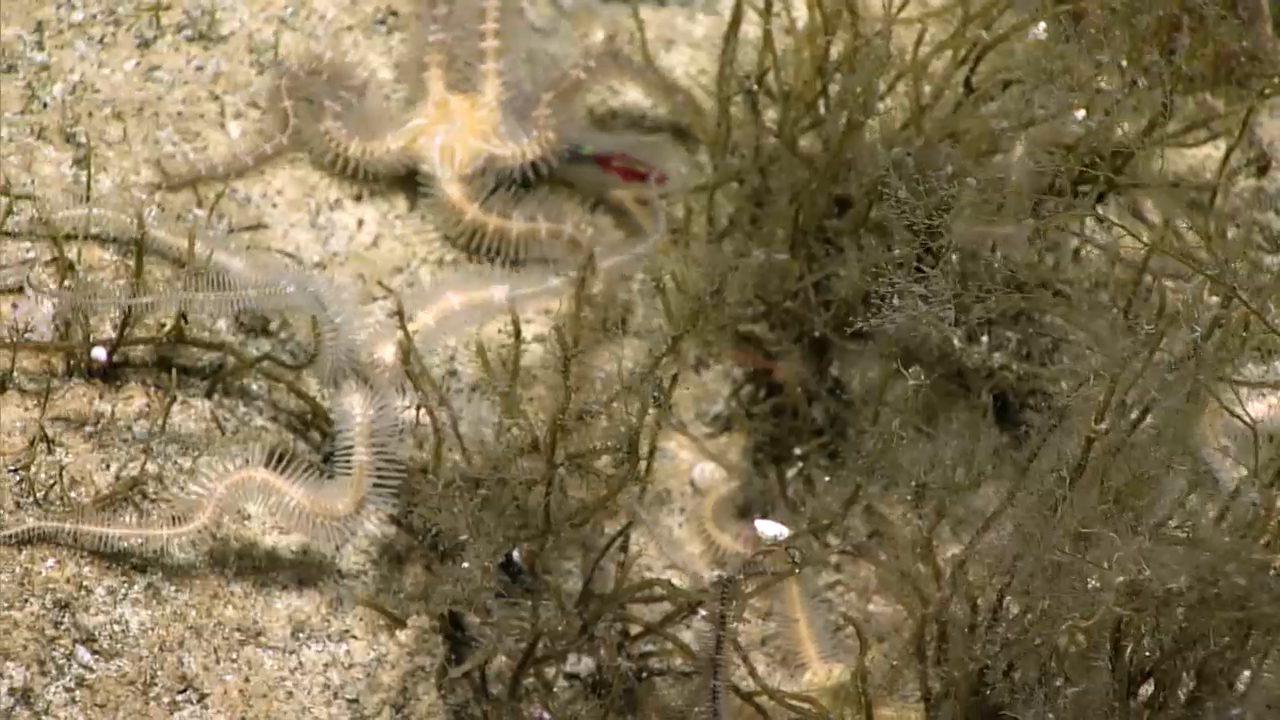
Off Jarvis Island in the Pacific, a NOAA robot filmed seafloor animals taking a swimming squid out of the water and fighting over it.
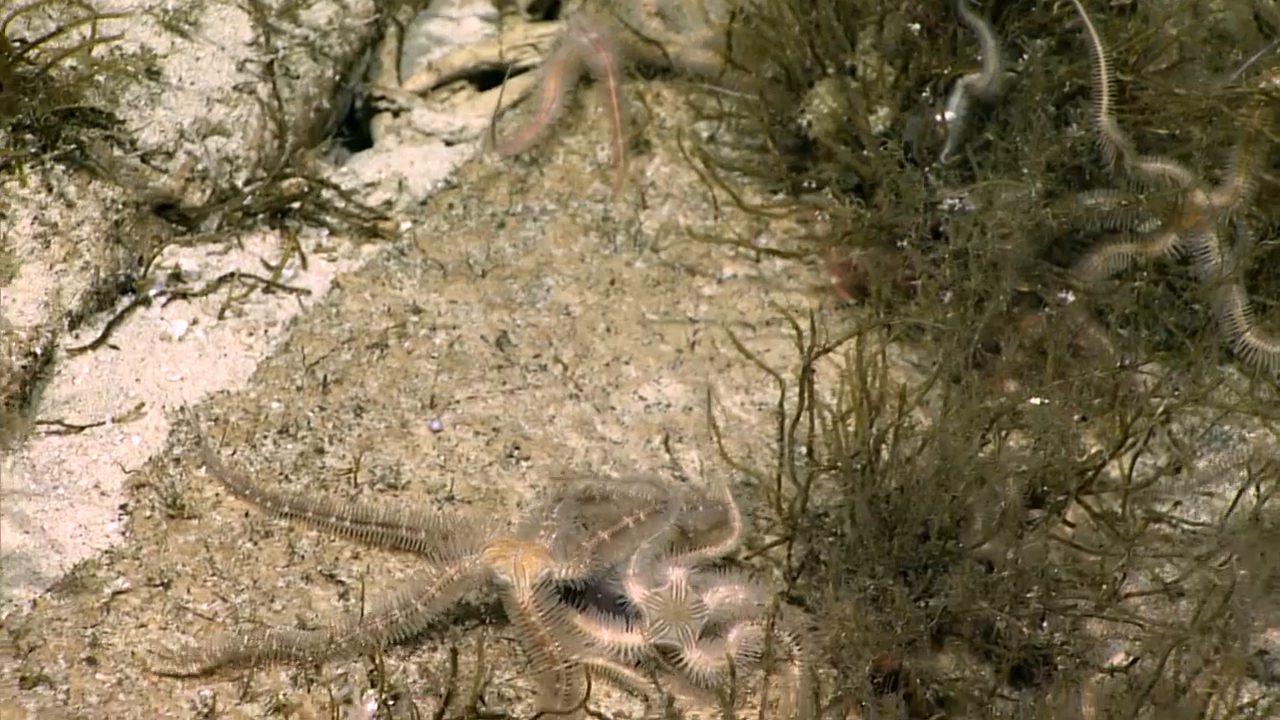
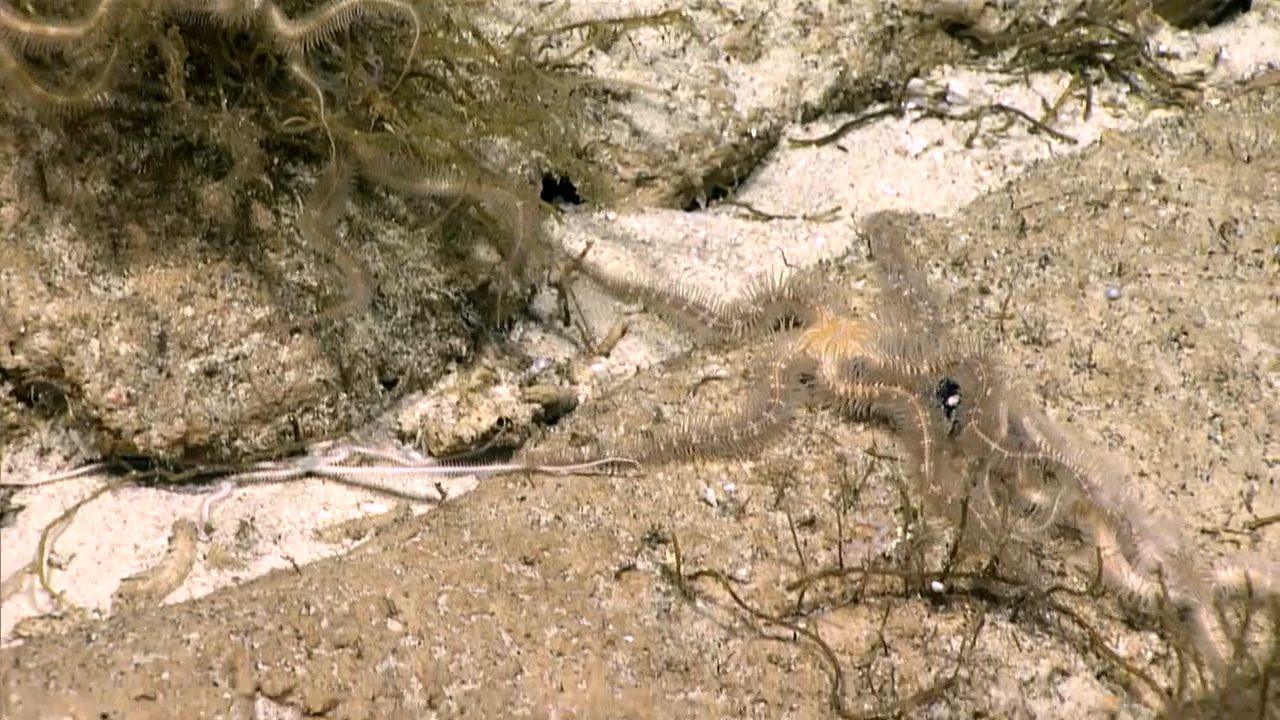
Brittle stars look like starfish drawn with a thinner pen: a small central disc and five long, flexible, spiny arms. They cover parts of the deep seafloor, and they were thought to make their living mainly by scavenging.
On May 5, 2017, NOAA's remotely operated vehicle was exploring a ridge off the southeast side of Jarvis Island, an uninhabited island in the central Pacific, about 435 meters down. The same dive went on to find six dense coral communities. First, the cameras recorded something the science team had not seen before.
What the camera recorded
- A small squid, identified as a species of Abralia, swims just above a patch of seafloor crowded with brittle stars.
- A brittle star catches the squid with its arms and pulls it to the bottom.
- Other brittle stars close in, and the animals struggle with each other over the squid.
- The squid is eaten.
Why scientists cared
Catching a swimming animal is a different thing from eating what drifts down. NOAA described what the brittle stars did as a deliberate act of predation and called the footage a "once in a lifetime" observation. The clip was released under the title "Brutal Brittle Stars."
What nobody knows yet
How often this happens when no camera is present. Brittle stars are among the most common animals on parts of the deep seafloor. If they regularly take live prey from the water above them, their role in deep-sea food webs is different from the one scientists had assumed.
How this was recorded
The footage comes from NOAA's 2017 expedition Mountains in the Deep: Exploring the Central Pacific Basin. It was filmed by the remotely operated vehicle Deep Discoverer, working from the NOAA Ship Okeanos Explorer, and NOAA later featured it in its collection of notable feeding events.
Next case file 005 →Hundreds of Fish Eggs, No Parent in Sight, and One Deep-Sea CrabThe record
- Date
- May 5, 2017
- Location
- Ridge off the southeast side of Jarvis Island, Pacific Ocean
- Depth / setting
- About 435 m (1,427 ft)
- Camera
- ROV Deep Discoverer, NOAA Ship Okeanos Explorer
- Animals
- Brittle stars (Ophiuroidea); squid (Abralia sp.)
- Footage
- NOAA Ocean Exploration, Mountains in the Deep: Exploring the Central Pacific Basin
- Rights
- Public domain (U.S. Government work)
Sources
- NOAA Ocean Exploration, "Amazing Feeding Events"
- NOAA Ocean Exploration, original video, May 5, 2017
Published 2026-11-15 · Corrections: contact@wildevidence.com