A Wreckfish Swallowed a Shark Whole While Eleven Others Were Busy Eating
A NOAA robot went looking for a shipwreck off South Carolina. It found a dead swordfish, a crowd of deep-sea sharks, and a much bigger fish using the robot as cover.
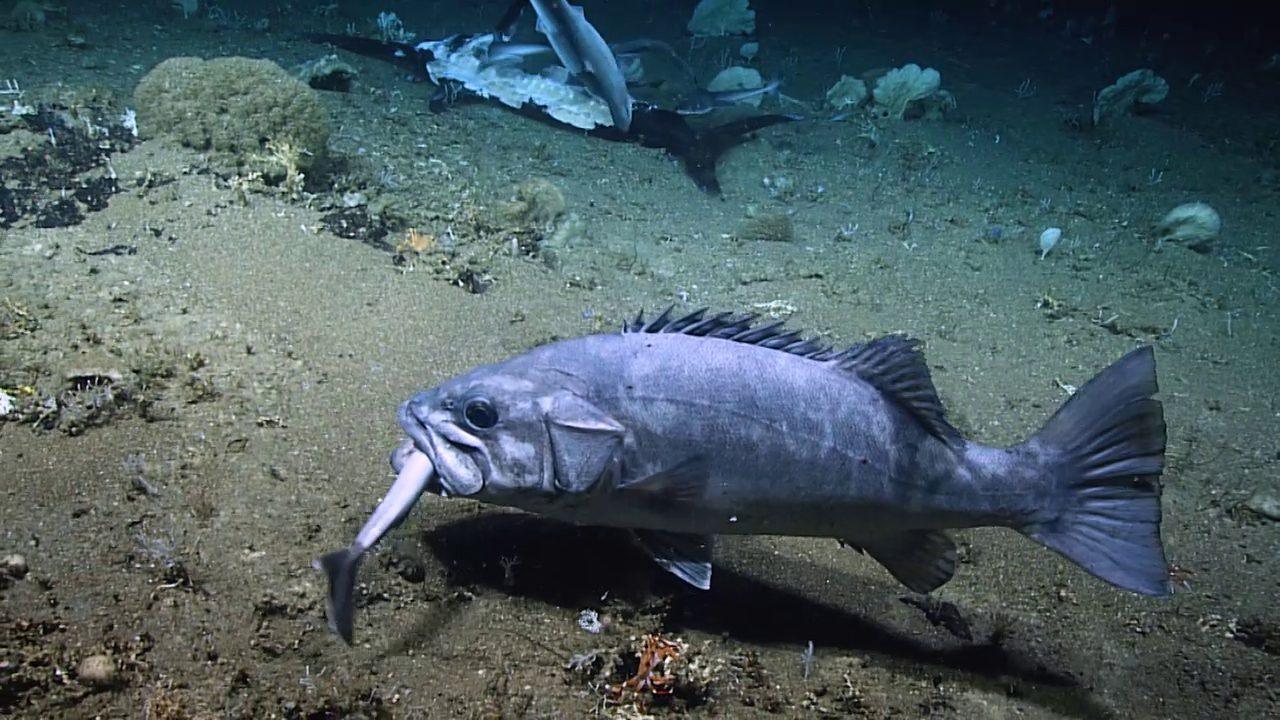
The dive was supposed to be about a shipwreck. On June 28, 2019, the remotely operated vehicle Deep Discoverer was working about 80 miles off the coast of South Carolina, roughly 450 meters down, at a site thought to hold a wreck. It turned out to be rock. What the robot's cameras found at the base of a small rise was something researchers almost never get to watch.
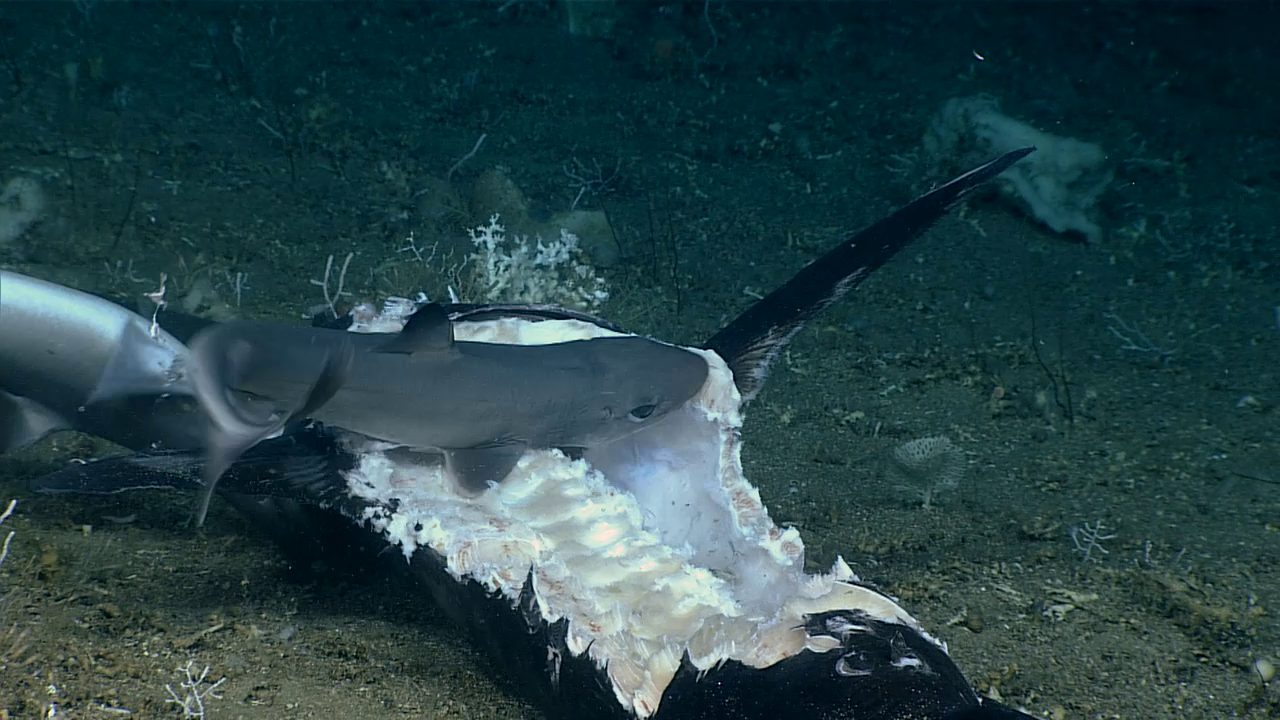
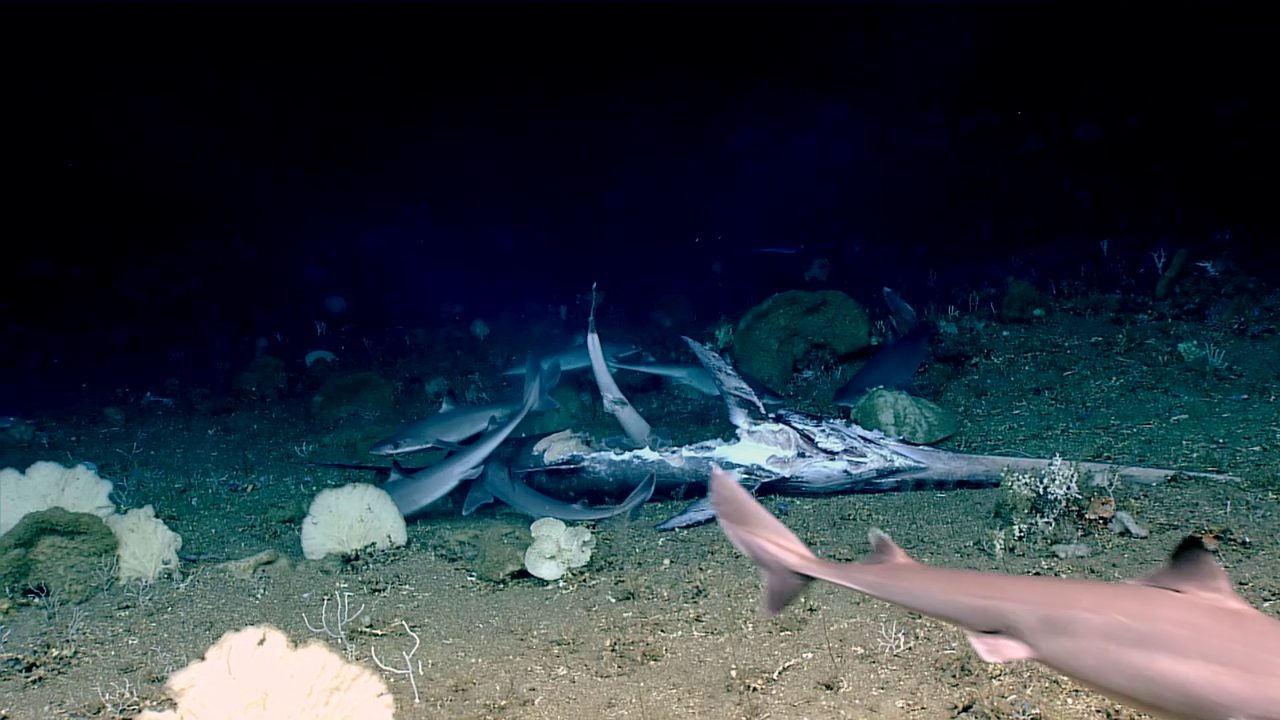
A swordfish about eight feet long was lying on the seafloor, and at least eleven deep-sea sharks were eating it.
What the camera recorded
- The carcass was fresh. NOAA's dive log describes the swordfish as recently dead, perhaps by only a few hours, with no visible hook or fishing line.
- Two kinds of dogfish shark were feeding. Most were Genie's dogfish, a species that science only described in 2018. At least two larger animals were roughskin dogfish.
- The sharks crowded the carcass from both sides and fed along its exposed flank.
- A wreckfish, a large deepwater predator, was holding position near the vehicle. According to the dive log, it appeared unable to feed on the swordfish directly.
- The wreckfish then swam back into view with one of the small dogfish in its mouth, the shark's tail still hanging out. NOAA's scientists concluded that it had used the vehicle for cover to ambush the shark.
Why scientists cared
A large dead animal that sinks to the deep seafloor is called a food fall. A food fall delivers a big parcel of food to a place where food is scarce, but such events are rare and impossible to predict, and most of the well-studied ones are whales. NOAA's team called the find serendipitous: at the rate the sharks were eating, little would have been left after about a day.
The second surprise was the wreckfish. Shark vertebrae had turned up in wreckfish stomachs before, in fish caught on hook and line, and researchers had assumed those bones were scraps thrown from fishing boats. This dive showed a wreckfish eating a live shark whole, which means at least some of those bones came from hunting.
The observation was published in 2020 in the Journal of the Ocean Science Foundation. Fisheries biologist Peter Auster, who described the encounter for NOAA, summed it up this way: "Sometimes 'sharks just happen.'"
What nobody knows yet
The cameras did not record the strike itself, only the wreckfish returning with the shark. How often wreckfish hunt sharks is still an open question.
How this was recorded
Deep Discoverer is a remotely operated vehicle that works on a tether from the NOAA Ship Okeanos Explorer. Its cameras send live video up to the ship and, by telepresence, to scientists on shore. NOAA releases the footage to the public domain, which is why the frames on this page can be shown here.
Next case file 002 →A Bobcat Raided a 14-Foot Python's Nest, Then Came Back to Face HerThe record
- Date
- June 28, 2019
- Location
- About 80 miles off South Carolina, USA
- Depth / setting
- About 450 m (1,476 ft)
- Camera
- ROV Deep Discoverer, NOAA Ship Okeanos Explorer
- Animals
- Wreckfish; Genie's dogfish (Squalus clarkae); roughskin dogfish; swordfish
- Footage
- NOAA Ocean Exploration, Windows to the Deep 2019
- Rights
- Public domain (U.S. Government work)
Sources
- NOAA Ocean Exploration, dive log for June 28, 2019
- NOAA Ocean Exploration, "Sharks Happen" (2020)
- NOAA Ocean Exploration, "Amazing Feeding Events"
Published 2026-11-15 · Corrections: contact@wildevidence.com