Hundreds of Fish Eggs, No Parent in Sight, and One Deep-Sea Crab
On a canyon wall off North Carolina, a NOAA robot stopped at a white patch on a rock. It was a nest, and something had found it first.
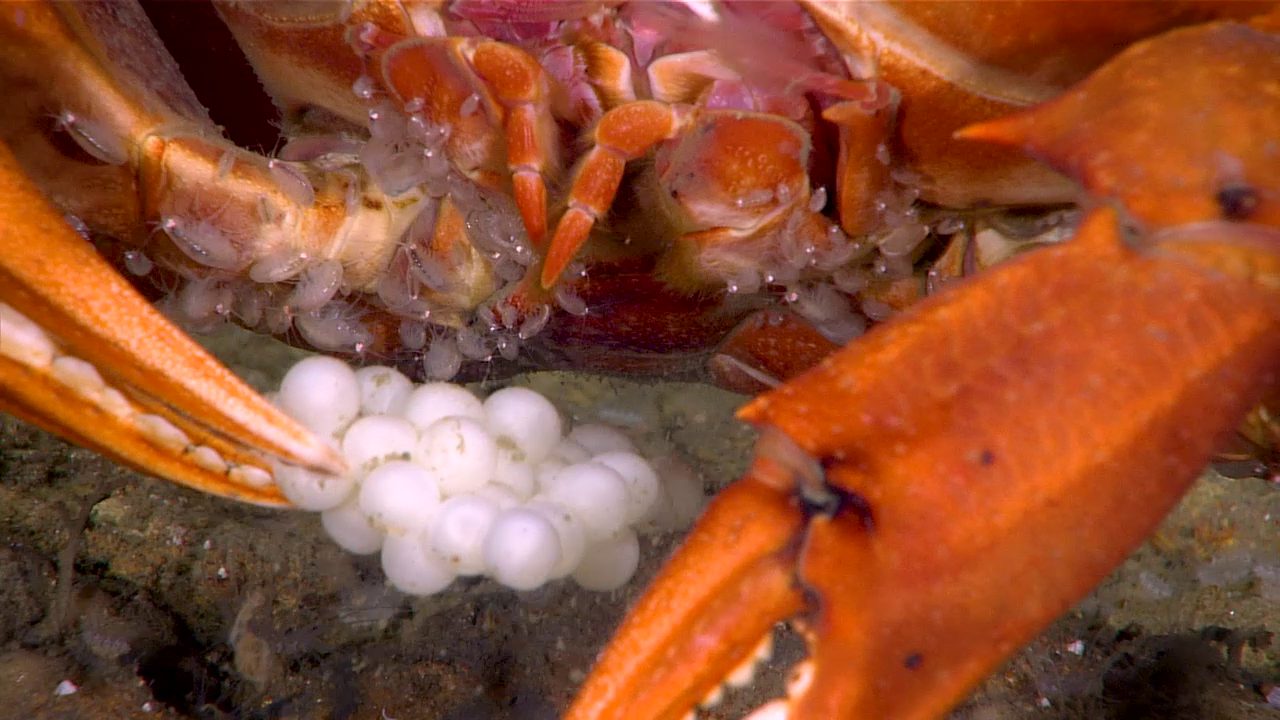
Dive 13 of NOAA's Windows to the Deep 2019 expedition began near the bottom of a small canyon off North Carolina, 1,034 meters down, and climbed the wall. At 920 meters the remotely operated vehicle stopped at a patch of white on the rock.
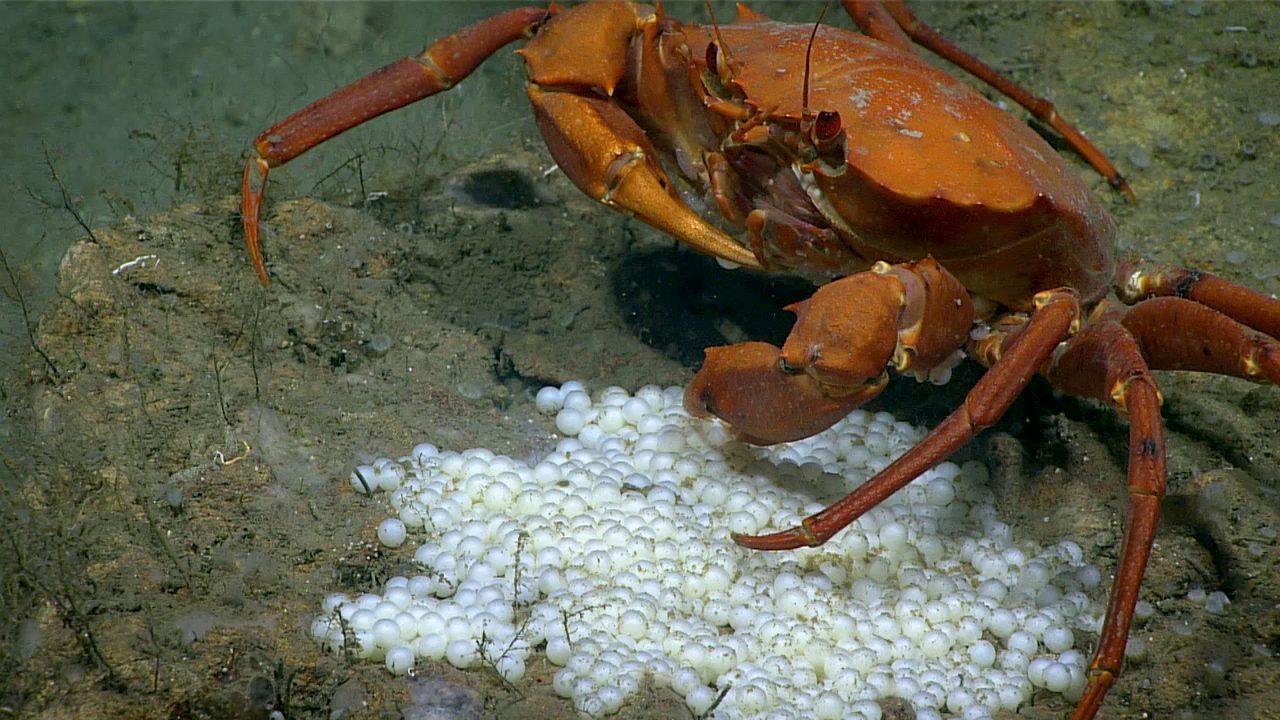
Up close the patch was a cluster of hundreds of fish eggs. Standing over it was a large orange crab, eating them.
What the camera recorded
- The crab is a species of Chaceon, either the golden deep-sea crab or the Atlantic deep-sea red crab.
- It uses its large claws to pluck eggs from the pile and eat them, again and again.
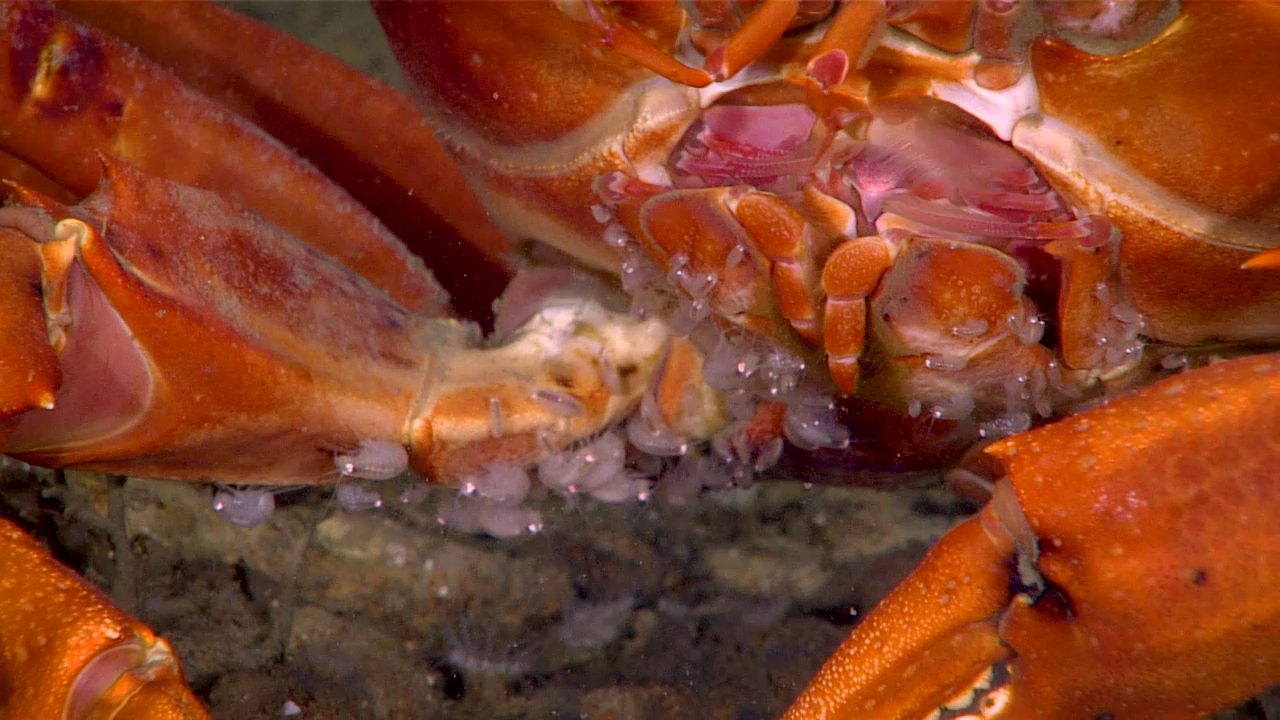
- When the camera zooms in, dozens of amphipods, small crustaceans distantly related to the crab, are crawling over its mouthparts. NOAA's scientists think they were scavenging the scraps the crab dropped.
- When a larger king crab passes through the area, the Chaceon crab leaves, carrying off a bundle of more than a dozen eggs stuck together.
Why scientists cared
Two things were new. The first is about the crab. Chaceon crabs were known as opportunistic feeders that eat animals living in and on the seafloor, such as mollusks and worms. This dive confirmed that fish eggs are part of their diet too.
The second is about the fish. Fisheries biologist Peter Auster proposed that the eggs belonged to a pallid sculpin, a deep-sea fish in the fathead family. How and where that species lays its eggs, and whether a parent guards them, had been open questions. Here was a nest on rock with no adult near it.
What nobody knows yet
Whether these eggs were ever guarded. One unguarded nest could mean that pallid sculpins leave their eggs, or that this parent was driven off before the camera arrived.
How this was recorded
The remotely operated vehicle Deep Discoverer filmed the crab during the Windows to the Deep 2019 expedition, working on a tether from the NOAA Ship Okeanos Explorer. Two scientists named in NOAA's dive log, Peter Auster and Martha Nizinski, identified the eggs and described what these crabs were already known to eat.
Next case file 006 →A Polar Bear Wearing a Camera Went Under the Sea Ice. Then There Was Blood on the Snow.The record
- Date
- July 5, 2019
- Location
- Canyon off North Carolina, USA
- Depth / setting
- 920 m (3,018 ft)
- Camera
- ROV Deep Discoverer, NOAA Ship Okeanos Explorer
- Animals
- Deep-sea crab (Chaceon sp.); pallid sculpin eggs (Cottunculus thomsonii, proposed); amphipods
- Footage
- NOAA Ocean Exploration, Windows to the Deep 2019
- Rights
- Public domain (U.S. Government work)
Sources
Published 2026-11-15 · Corrections: contact@wildevidence.com